“Radio Prishtina” archive digitization, treasure of cultural heritage
Z.Qorraj/RTKlive
The digitization process of the Radio Prishtina archive has been completed.
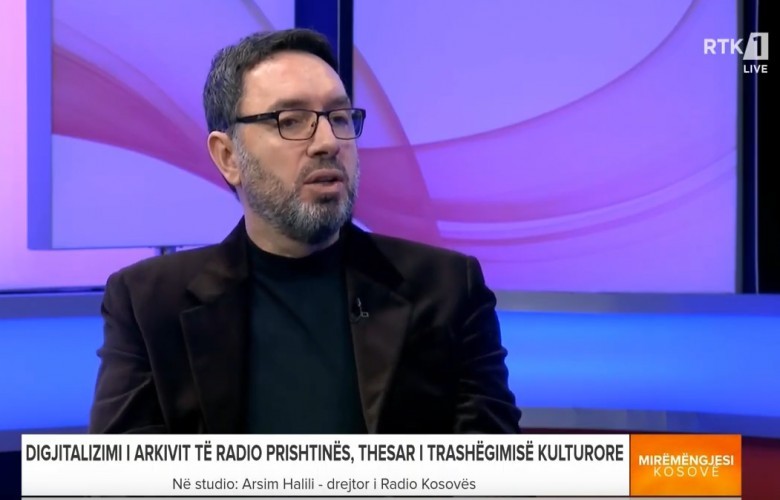
Approximately 11,000 copies have been restored and are now ready for broadcasting. Arsim Halili, the Director of Radio Kosovo, highlighted that this initiative has been a priority and responsibility of the public broadcaster, referring to the digitization of the archive as a "treasure of cultural heritage."
In an interview on the show "Mirëmëngjesi Kosovë" on RTK, Halili announced that the digitized tapes have been placed in the audio library of Radio Kosovo. He noted that following an evaluation by EBU representatives in 2015, it was determined that these materials were well-preserved due to their cardboard covers, which protected them over time.
Halili mentioned that there were various challenges and uncertainties during the process, along with many preparatory meetings to ensure a smooth transition into digitization. “We held regular meetings with the production staff and experts from ‘Radio Prishtina,’ who are now retired. Their expertise was invaluable in guiding us through the process. We faced dilemmas in adhering to various international standards for archiving materials. Once we resolved these issues, we sought assistance from ‘Radio Skopje’ to obtain a test tape that would help calibrate our equipment. After two months of preparation, we began the digitization process,” he explained.
He confirmed that the digitization is now fully complete. “All materials have been completely digitized. There had been previous attempts at partial digitization, but I felt it was necessary to digitize everything thoroughly, from the first tape to the last,” Halili added.
During the process, they discovered old materials dating back to 1954, including popular and entertaining songs, a rich collection of radio dramas created by leading artists, spoken shows, political speeches from that time, and serious music composed by local musicians. The majority of the materials are in Albanian, but there are also recordings in the languages of other communities, including Serbian and Turkish. All have been digitized without exception, Halili stated.
In total, about 11,000 copies were digitized over a span of 19 months. The project began in May 2023 and was completed at the end of 2024, with 10,723 tapes digitized in 3,718 hours and 48 minutes.