Qosja honors Kadare, the writer who gave Albania a global voice
Z.Qorraj/RTKlive
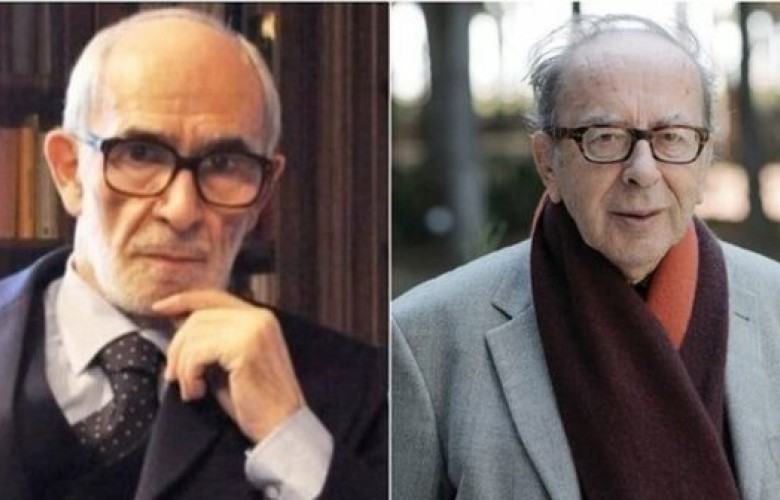
Academician Rexhep Qosja has commemorated the renowned writer Ismail Kadare on the occasion of his 90th birthday with a reflective essay assessing Kadare’s historical and cultural significance.
Qosja describes Kadare as a writer who has given the Albanian nation a universal dimension.
He emphasizes that this date serves as both a celebration of Kadare's birth and a day of remembrance, as Kadare passed away in 2024, leaving behind a body of work that has transcended time and the limits of the Albanian language.
According to Qosja, Ismail Kadare has placed the historical, mythical, and ethical experiences of Albanians on the map of European and world literature, granting the Albanian language a universal status and providing Albanian culture with an internationally respected voice.
In his essay, Qosja reflects on his personal and intellectual relationship with Kadare, which dates back to the 1970s, noting that they have been friends, interlocutors, and critics of each other. Each, under different historical and political circumstances, faced significant moral and intellectual trials imposed by the systems in which they lived.
A significant portion of the article addresses Ismail Kadare's request for political asylum in France in 1990. Qosja recalls that this act was misunderstood by many; however, he had publicly defended it as a rejection of dictatorship and an ethical and intellectual stance in favor of freedom of speech and literary expression. "Kadare did not flee to save himself, but to protect his work and his freedom," Qosja emphasizes.
The academician does not shy away from discussing the disagreements they have had over the years, particularly the controversies surrounding Albanian identity. He stresses that these disagreements were rooted in intellectual and cultural differences.
"Our most famous controversy centered on the issue of Albanian identity. There were varying opinions, arguments, and perspectives on this fundamental topic. These disagreements were not personal; they were intellectual and cultural. However, as often happens in human life, they did leave consequences on our personal relationship. Our paths diverged, and unfortunately, they never crossed again," says Qosja.
Despite these differences, Qosja believes that the greatness of Ismail Kadare as a writer and his historical importance for Albanian culture are beyond any controversy. He asserts that literature is judged not by personal relationships but by the depth of thought, the power of language, and its long-lasting impact.
In conclusion, academician Rexhep Qosja emphasizes that Ismail Kadare was and remains a writer for his nation, one who loved Albania through his creative work, transforming Albanian history and spirit into great literature. "Ismail Kadare loved Albania not just in words, but through his creativity, by transforming Albanian history, drama, and spirit into great literature," Qosja states.
He adds that, although Kadare's life has come to an end, his work and ideas are eternal and will continue to be read and interpreted by future generations.