Jonida Maliqi praises Kosovo Chords Festival
Z.Qorraj/RTKlive
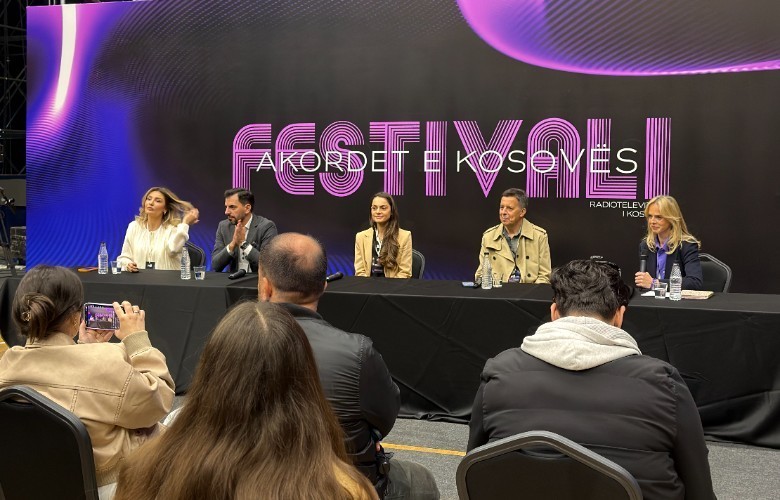
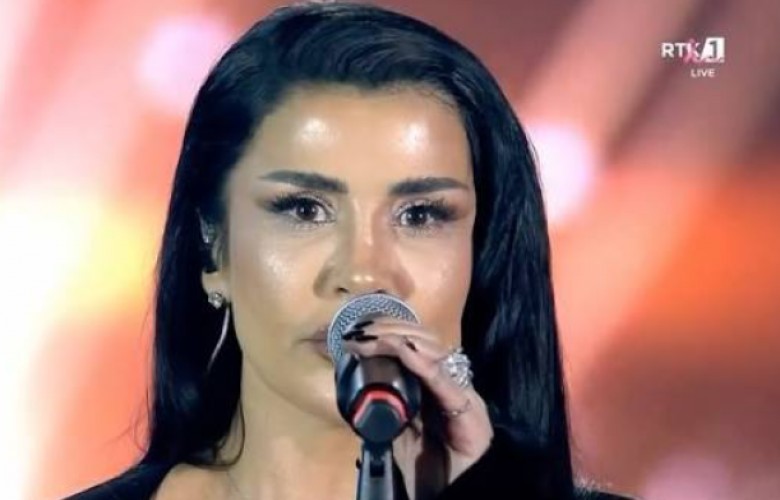
Albanian singer Jonida Maliqi was a special guest at the fourth edition of the “Akordet e Kosovës” (Kosovo Chords) Festival, where she performed “Ktheju tokës” (Return to the Earth), the song with which she represented Albania at the 2019 Eurovision Song Contest.
Maliqi said she had received the invitation several months ago and accepted it with great pleasure, expressing her excitement about performing again for the Kosovar audience.
She welcomed the revival of the “Akordet e Kosovës” name, describing the festival as an important event for music and performing arts in Kosovo.
“I have heard of ‘Akordet e Kosovës’ as a legend, and I am very happy that this name has returned,” Maliqi said.
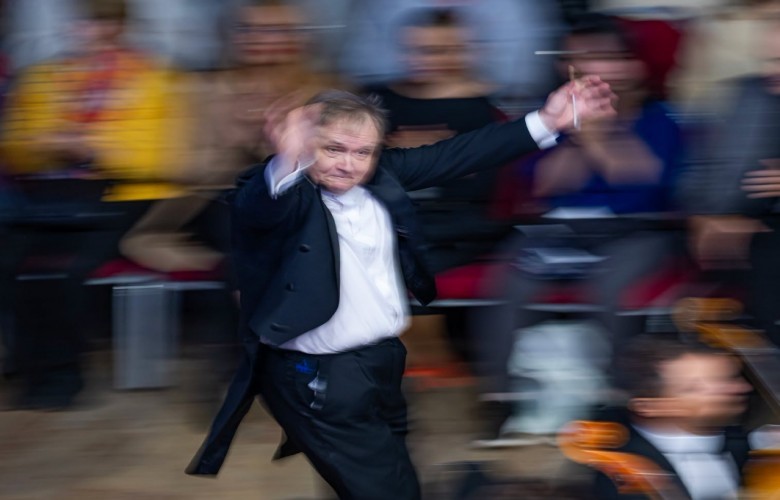
Praising the organization, stage production, live orchestra and overall atmosphere, she described the festival as an excellent initiative and expressed hope that it could eventually provide Kosovo with an opportunity to participate in Eurovision.
“I am very happy that Kosovo finally has a festival dedicated to music, singing and acting. I know this is the fourth edition, but you already have considerable experience. I have the impression that this could be a good omen for Kosovo to represent itself at Eurovision,” she said.
Maliqi also highlighted the return of the Children's Night, describing it as an important platform for nurturing young talent and supporting children's artistic development.
Recalling her own beginnings on stage at the age of nine, through international children's festivals in Shkodra, she said early artistic experiences play an important role in shaping performers, building their confidence and helping them develop lasting careers.
“I am very glad that you have also brought back the Children's Night, where the focus is on children. It is an essential part of creating art and nurturing the artists of the future,” she said.
Drawing on her Eurovision experience, Maliqi also discussed the importance of vocal performance compared with other aspects of stage presentation.
She acknowledged that visual performance has become increasingly important at major music competitions, including Eurovision, but stressed that vocal ability and interpretation remain fundamental to an artist's identity.
“Live singing requires you to bring something more grand and powerful. I am not against commercial music, but on a big stage, vocals and interpretation come first, followed by the other elements of the performance. Performance has certainly become extremely important in recent years, including at Eurovision, but I do not think it will ever outweigh the importance of vocals for a true artist. Without vocal ability, you remain simply a very good performer,” Maliqi said.
She described festivals as bridges that connect artists with larger stages and opportunities, emphasizing that competition is an essential part of professional growth.
According to Maliqi, competition encourages artists to bring out their best qualities and learn to handle both victories and defeats.
“Competition makes you strive, not out of anger, but by bringing out your strengths to the fullest. It also teaches you to learn, whether you win or lose,” she said.
Beyond the professional significance of her appearance, Maliqi said returning to Kosovo carried a special emotional meaning. She recalled that she had taken some of her first career steps in Kosovo and that performing again at the “1 Tetori” Hall after 15 years was particularly meaningful.
Comparing her emotions at Eurovision with those of returning to the Kosovar stage, she said that experience does not diminish stage fright but increases an artist's sense of responsibility towards the audience.
“At Eurovision, we spent 15 days in Tel Aviv, with intensive rehearsals, including rehearsals in front of an audience. Going on stage felt like a dress rehearsal. But returning to Kosovo after so many years carries a great responsibility. Every time I return to the stage, the emotion comes back and grows, just as the responsibility grows with the years,” she said.
Maliqi concluded by encouraging artists to participate in festivals and cultural events in their countries, describing their involvement as an important contribution to the development of art and culture.