Kurti highlights progress on rights of RAE communities
Z.Qorraj/RTKlive
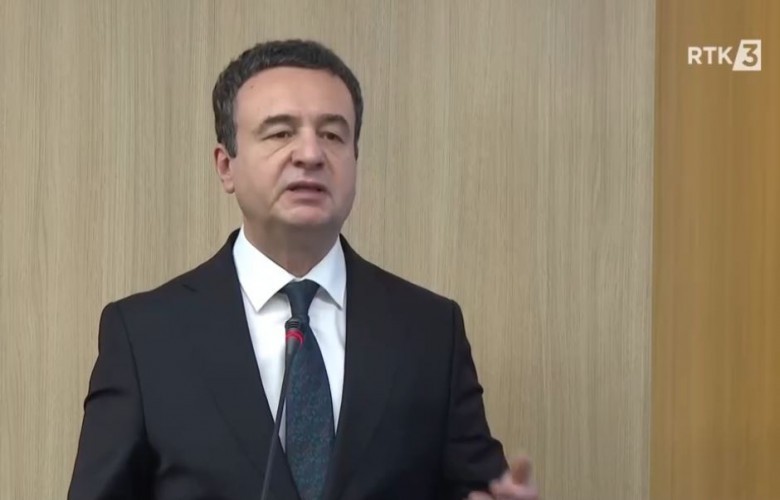
Kosovo Prime Minister Albin Kurti has announced that more than 80 percent of the activities envisaged in the 2022–2026 Action Plan for the Advancement of the Rights of Roma, Ashkali and Egyptian Communities have been fully implemented.
He announced at the Regional Summit on Combating Racial Discrimination against these communities, stressing that their inclusion is a matter of citizens' rights and state responsibility, not privilege or preferential treatment.
Kurti said his government had taken concrete steps to combat discrimination and promote equal opportunities in education, employment and public institutions.
Regarding educational support, he announced that 494 scholarships worth a total of €190,800 were awarded to students from these communities for the 2025–2026 academic year. A further 554 scholarships have been allocated for the 2026–2027 school year.
The scholarship amount per student has increased from €300 to €400 per academic year, Kurti said.
He also noted that funding for learning centers had risen from €250,000 to €370,000. The funding supports 10 non-governmental organizations managing 54 centers.
More than 2,600 children from the Roma, Ashkali and Egyptian communities are expected to benefit from educational support during the 2026–2027 school year, covering grades one through nine.
Kurti added that draft teaching materials on the history, culture and traditions of these communities had been prepared. A review of the Romani language curriculum and the development of new textbooks are also planned.
He described education as one of the most effective tools for tackling inequality, stressing that no child should have their future limited by the circumstances into which they are born.
On housing, Kurti said the government had allocated approximately €37 million for social housing projects and the reconstruction and renovation of homes belonging to vulnerable families, including those from Roma, Ashkali and Egyptian communities.
He described adequate housing as a fundamental right and a prerequisite for security, stability and social integration.
Addressing employment, Kurti said economic inclusion remained a government priority, emphasizing that access to jobs promotes independence, dignity and active participation in society.
He recalled that an inter-institutional team was established in 2022 to promote employment opportunities for these communities. In cooperation with the Kosovo Police, open days were also organized to encourage members of non-majority communities, particularly young people, to join security institutions.
Since the team's establishment, the number of Roma, Ashkali and Egyptian community members employed in the Kosovo Police has increased by 37, reaching a total of 70, according to Kurti.
He also highlighted their representation within the police, including a major from the Roma community, a lieutenant from the Ashkali and Egyptian communities, a captain from the Ashkali community, and seven sergeants — two Roma, two Egyptian and three Ashkali.
Kurti further noted that his government includes one minister and two deputy ministers from the Roma, Ashkali and Egyptian communities, stressing the importance of their representation in state institutions.