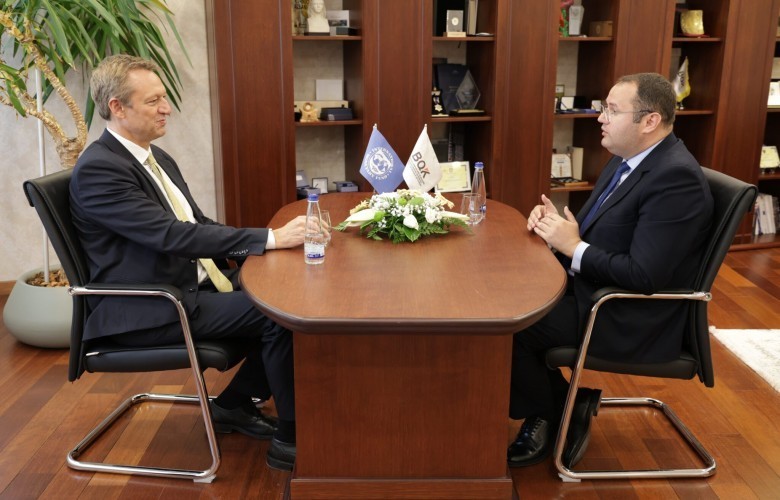
CBK and IMF discuss financial stability and reform agenda
Z.Qorraj/RTKlive
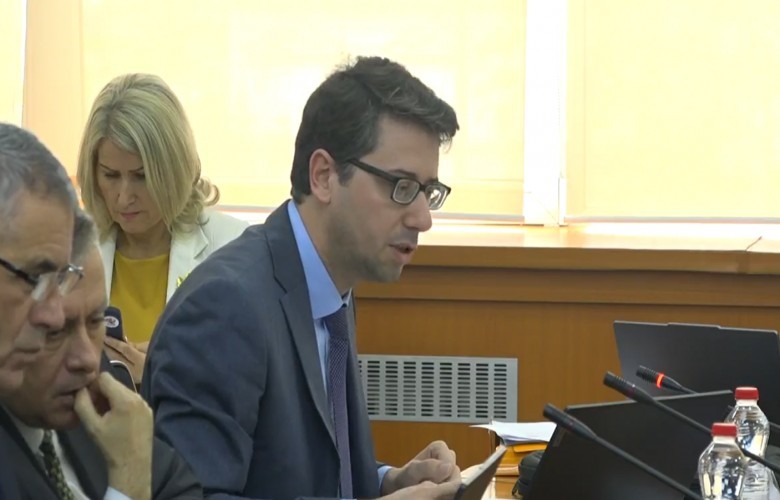
The Governor of the Central Bank of the Republic of Kosovo (CBK), Ahmet Ismaili, recently met with Tobias Adrian, the Chief Financial Advisor and Director of the Monetary and Capital Markets Department at the International Monetary Fund (IMF).
During their meeting, they discussed key developments in Kosovo's financial sector, the strategic priorities of the CBK, and the ongoing collaboration with the IMF to ensure financial stability and promote institutional reforms.
Governor Ismaili updated Adrian on the performance of Kosovo's financial sector, noting that it remains well-capitalized, liquid, and stable. He emphasized the need to enhance risk-based supervision, improve the regulatory and supervisory framework, implement macroprudential policies, and align with European standards and best practices.
The meeting also focused on the implementation of the CBK Strategic Plan, which serves as a framework for institutional reforms and the modernization of the financial sector. Topics discussed included the modernization of payment systems, financial digitalization, consumer protection, strengthening institutional governance, capacity development, and the advancement of financial markets.
Additionally, the two parties exchanged perspectives on the trends in the international financial environment and their effects on small, open economies. They stressed the importance of prudent policies and institutional resilience in navigating global risks and uncertainties.
In conclusion, Governor Ismaili expressed his gratitude for the IMF's ongoing support, which includes technical assistance and expert advice in critical areas such as financial stability, banking supervision, and institutional development.
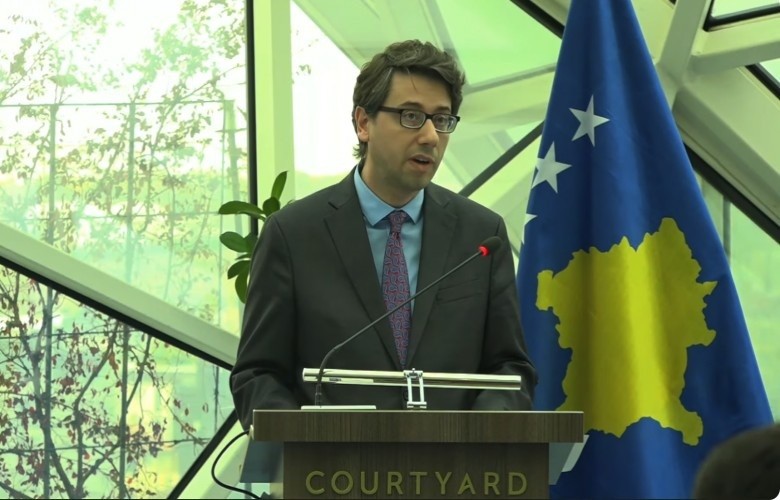
Tobias Adrian's visit to Kosovo is tied to his participation in the high-level Regional Conference titled “Policy and Regulatory Frameworks in a Changing Environment,” organized by the CBK. This conference brings together representatives from central banks, financial institutions, and international partners to discuss developments in areas such as crypto-assets, digital money, and financial regulation.