Kosovo’s €4.27 billion budget sparks debate
Z.Qorraj/RTKlive
Kosovo’s draft budget for 2027, worth €4.27 billion, has sparked debate in the parliamentary commission, with the government highlighting economic growth and fiscal sustainability, while opposition MPs have questioned the implementation of capital investments and the impact of inflation on citizens’ living standards.
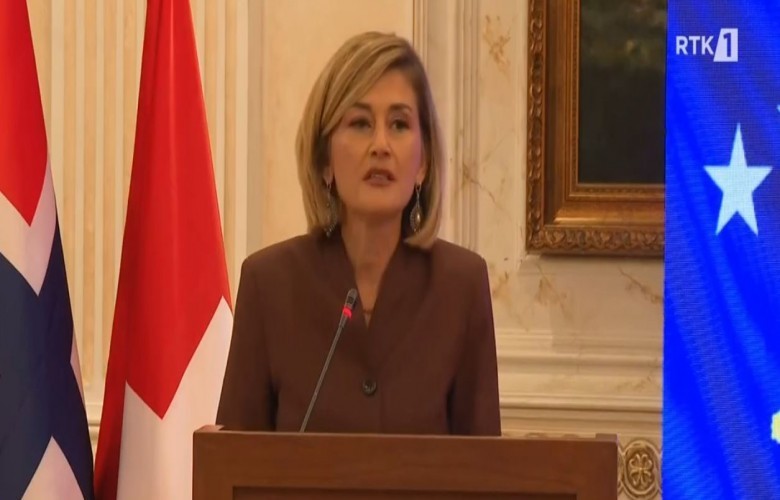
Finance Minister Hekuran Murati presented the draft budget, which foresees total expenditures of €4.2687 billion and revenues of approximately €4 billion. The remaining amount will be covered through deficit financing.
Murati said the budget was prepared based on economic growth projections, increased revenues and the need to maintain public finance sustainability.
The planned budget deficit stands at 2 percent of Gross Domestic Product (GDP), estimated at €13.3 billion, with financing needs amounting to €266 million.
Under the proposed allocations, €1.0849 billion is earmarked for wages and salaries, €588 million for goods and services, and €1.446 billion for subsidies and transfers.
Capital investments are projected at €1.07 billion, while €55 million is allocated for public debt interest payments and €11.9 million for the current reserve.
Murati said that, starting in 2027, capital investments would no longer be financed through the investment clause but would instead fall within the 2 percent budget deficit limit.
Opposition questions investment implementation
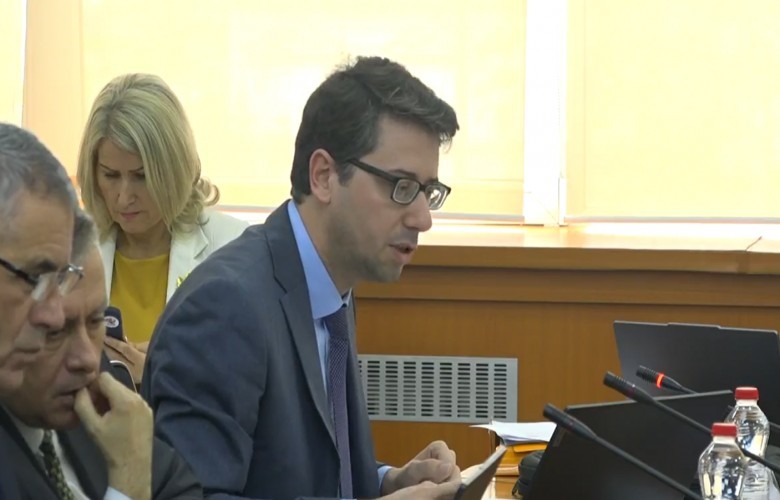
Opposition MPs raised concerns over the government's ability to implement planned capital investments, arguing that increased budget allocations have not translated into sufficient progress on public projects.
Democratic Party of Kosovo (PDK) MP Mergim Lushtaku referred to a GAP Institute report covering 2021–2024, which found that more than €1 billion allocated for planned investments had not been spent.
He argued that the failure to implement these investments was directly affecting citizens through delays in the construction of roads, bridges, schools and other public infrastructure.
Lushtaku also questioned whether the nominal increase in the budget would improve citizens' living standards amid inflation and rising living costs.
Democratic League of Kosovo (LDK) MP Avdullah Hoti said the government would collect around 32 percent of national income from citizens and businesses next year, stressing that public funds should generate tangible economic benefits.
He described the budget as a strategic document rather than merely an accounting exercise and criticized the government for failing to adequately address the purchasing power of salaries and pensions.
Hoti also raised concerns about infrastructure and healthcare, noting that households continue to cover a significant share of medical expenses themselves.
He called on the government to ensure that the commitments outlined in its programme, presented to the Assembly on September 13, 2026, were reflected in the three-year budget framework for 2027–2029.
Responding to criticism over capital investment implementation, Murati said the problem was longstanding and could not be attributed solely to the current government.
He cited institutional capacity and administrative procedures as some of the factors affecting the implementation of capital projects.
Regarding inflation and the rising cost of living, Murati acknowledged that these remained major challenges in Kosovo and internationally, pointing to geopolitical developments, including the war in Ukraine and tensions in the Persian Gulf.
On the government's programme commitments, he said its mandate runs until 2030, adding that some initiatives, including a €1 billion production guarantee programme, would be addressed through separate legislation on sovereign guarantees rather than the budget itself.
The debate became heated when Murati referred to Hoti's position in 2021 regarding the implementation of child allowances, claiming that Hoti had questioned whether the payments would be introduced because they were not included in the budget.
Hoti strongly rejected Murati's interpretation.
“You can never quote me. You distort what I say,” he responded.
At the end of the discussion, Murati invited MPs to address questions about specific projects with the relevant line ministers in the respective parliamentary committees.
He defended the draft budget as a financial plan with record levels of projected revenues and expenditures and called for its further consideration in the Assembly.