Assembly debates Kosovo’s European integration progress
Z.Qorraj/RTKlive
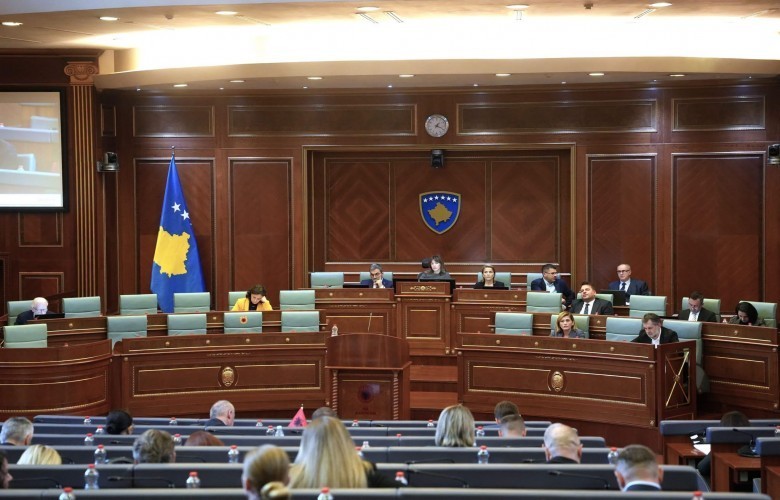
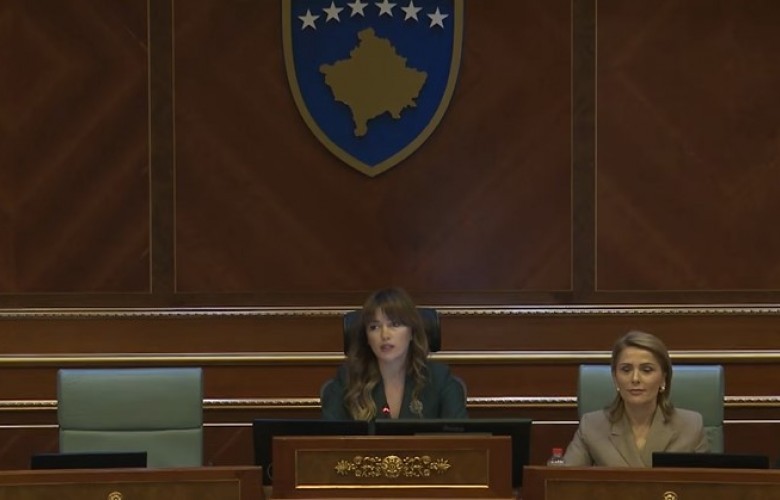
The Kosovo Assembly is holding an extraordinary session to discuss the European Commission’s 2026 Kosovo Report, with representatives of the ruling party and opposition offering differing assessments of the country`s progress towards European integration.
Alliance for the Future of Kosovo (AAK) parliamentary group leader Besnik Tahiri said the report reflected the country's actual situation over the past year, stressing that European integration remained Kosovo's only strategic direction.
“If there is an inter-party, inter-ethnic consensus in Kosovo, it is that Kosovo has no other path except integration,” Tahiri said.
Meanwhile, Democratic Party of Kosovo (PDK) parliamentary group leader Arian Tahiri called for the European Commission's findings to be treated with seriousness and responsibility, emphasizing that the report was an institutional assessment rather than a political document.
“The European Commission report is not a document of the opposition, PDK, LDK or the Alliance. It was not written to serve the interests of any political party. It is an institutional assessment of the progress of the Republic of Kosovo and, for this reason, it should be read with seriousness and responsibility,” he said.
Tahiri argued that the report raised concerns about prolonged institutional paralysis, weakened oversight mechanisms and limited parliamentary scrutiny of the executive.
He warned that a parliamentary majority did not give the government the right to treat state institutions as political property.
“The opposition is not an obstacle to democracy. Kosovo does not need institutions that serve the government,” he declared.
Representing the Vetëvendosje Movement (LVV), MP Liza Gashi thanked the opposition for initiating the session, describing it as an opportunity to discuss one of Kosovo's key strategic objectives.
Gashi stressed that European integration remained a shared national commitment that should transcend political differences.
“European integration remains our strategic orientation and a common commitment. I do not believe that there are political differences on this issue,” she said.
In contrast, Democratic League of Kosovo (LDK) parliamentary group leader Jehona Lushaku-Sadriu described the European Commission's assessment as showing a lack of progress in ten areas.
She said the report's findings required a public response and political and institutional accountability.
Lushaku-Sadriu argued that European integration had ceased to be a government priority, remaining largely at the level of political declarations rather than being reflected in decision-making, institutional cooperation and the implementation of reforms.
“For years, European integration has ceased to be a priority of this government. It has remained in declarations, while it has faded in decision-making, institutional cooperation and the implementation of reforms,” she said.