Bajrami: Hague trial affects the essence of Kosovo`s statehood
Z.Qorraj/RTKlive
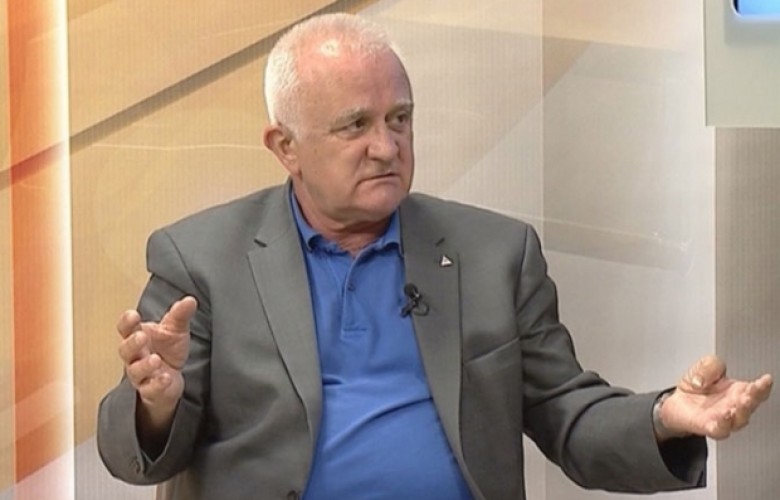
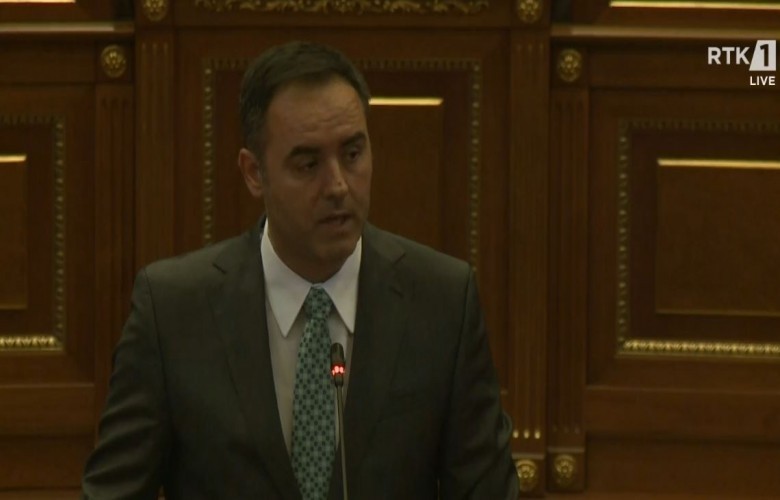
Academician Arsim Bajrami has described the trial in The Hague against former Kosovo Liberation Army (KLA) leaders as crucial to Kosovo`s history and future, calling for a stronger institutional response and a clear position by the state.
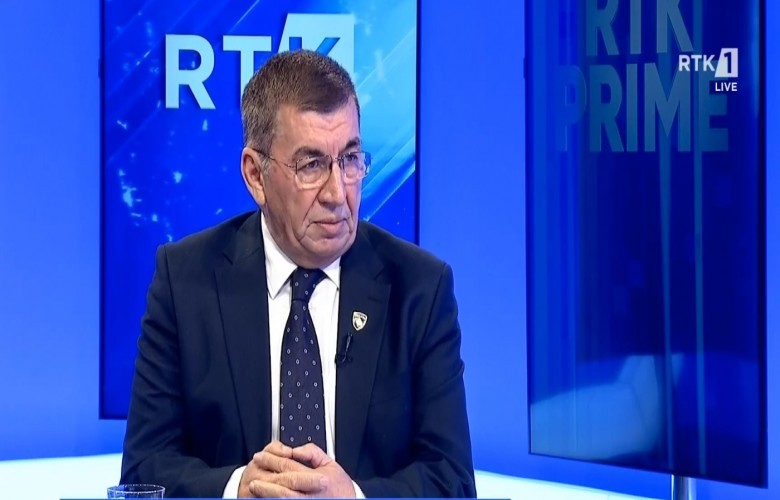
Speaking on RTK's Prime programme, Bajrami argued that the proceedings should not be viewed merely as an individual criminal case involving four defendants, but as a process with broader implications for Kosovo's statehood and the historical interpretation of its struggle for freedom and independence.
“The process taking place in The Hague is vital for the Republic of Kosovo, its history and its future. It affects the very essence of Kosovo's statehood. For this reason, a state and institutional response, as well as a fair and determined position by the Republic of Kosovo, are required,” Bajrami said.
He rejected arguments that the trial concerns only four individuals and has no implications for Kosovo's future.
“We are not trying four ordinary soldiers, but four founders of a patriotic guerrilla movement that has its place in Kosovo's history and has made a substantial contribution to the state-building process,” he said.
Bajrami Calls for Specialized Chambers Law to Be Finalized
Commenting on the Law on Amendments and Supplements to the Law on the Specialist Chambers, Bajrami said that since it had been approved by the Assembly, the legislative procedure should be completed by sending it to the President for promulgation and subsequent publication in the Official Gazette.
He stressed that he had not been involved in drafting the legislation or consulted by the Democratic Party of Kosovo (PDK), despite his previous involvement in drafting constitutional and legal acts.
“A serious state cannot play with its own laws. This process must be finalized and, if shortcomings are identified or amendments are needed, they must be addressed institutionally and through constitutional procedures,” he said.
According to Bajrami, withdrawing the law or returning it to the parliamentary procedure at the request of a political party would create institutional uncertainty.
He added that any shortcomings or contradictory provisions identified after its promulgation should be addressed through further legislative amendments.
Calls for Parliamentary Commission to Monitor Hague Proceedings
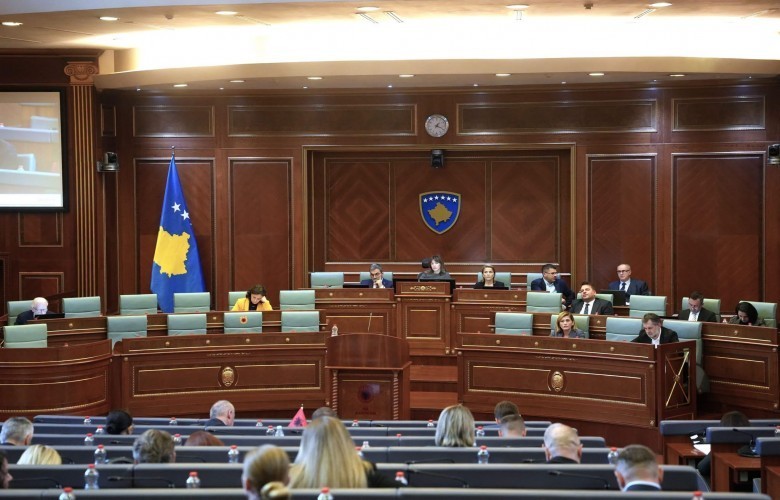
Bajrami also criticized the Kosovo Assembly for failing to respond earlier to the judicial proceedings in The Hague, arguing that an ad hoc parliamentary commission should have been established to monitor the case.
He said the Assembly should have taken institutional steps sooner, including requesting monitoring of the proceedings and holding meetings with representatives of the institutions overseeing the Specialist Chambers.
“An ad hoc parliamentary commission should have been established to monitor the process, instead of political parties mobilizing,” he said.
Bajrami described the legislation approved by the Assembly concerning the Specialist Chambers as an institutional protest against what he considers an unfair judicial process.
“I would rather call this legal initiative a protest, a protest by the Kosovo Assembly against an unfair trial full of violations,” he said.
He maintained that Kosovo's institutions had reacted too late to address what he described as procedural violations.
Bajrami Criticizes Conduct of Hague Proceedings
Bajrami further accused Kosovo's institutions of failing to respond to alleged violations during the trial.
He claimed that the principle of equality of arms had been undermined, arguing that the prosecution and the court had acted in a coordinated manner, leaving the defence at a disadvantage.
“Some professors, including myself as an academic, warned in time that action was needed because the process was going astray. There were not three parties, but two. The essential principle of a fair trial, equality of arms, was violated because the prosecution and the court built a partnership and coalition, complementing each other, while the defence was left alone,” he said.
Based on his monitoring of the hearings, Bajrami said he had found it difficult to expect an acquittal.
He alleged that whenever the prosecution made a mistake, the presiding judge would address it, or the prosecution would fill gaps left by the judge.
Bajrami described the proceedings as an attempt to undermine Kosovo's statehood and tarnish the KLA's wartime legacy, claiming that Serbia's and Russia's political interests were behind the process.
Appeals Chamber to Be Main Legal Battle, Bajrami Says
Bajrami said the main legal challenge for the former KLA leaders would now take place before the Appeals Chamber, stressing the need to establish a team of high-level legal experts to support their defence teams.
He emphasized that the proceedings were not over, as the case had only completed its first-instance stage.
“We are only in the first stage of this process. It is an ongoing process, and we have only passed the first instance. This is not the end of the trial. The main battle will take place before the Appeals Chamber, where only the legal and judicial dimensions will matter,” he said.
Bajrami called for preparations for a comprehensive appeal aimed at overturning the verdict.
He also proposed establishing a group of experienced legal professionals, including prosecutors specializing in war crimes, judges, lawyers and criminal law professors from Kosovo.
According to him, the group should receive government support and work alongside the defence teams by providing relevant evidence and materials that could be used during the appeals process.
“Within a month, the lawyers and defence teams should meet and be offered everything we can provide from the field, including new evidence. We know the context of the war in Kosovo best because we live here,” Bajrami said.