Bajrami proposes legal commission to support KLA appeals
Z.Qorraj/RTKlive
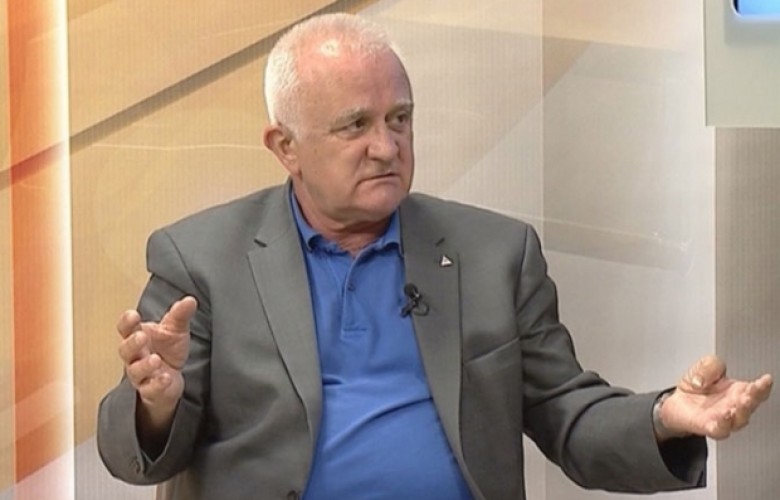
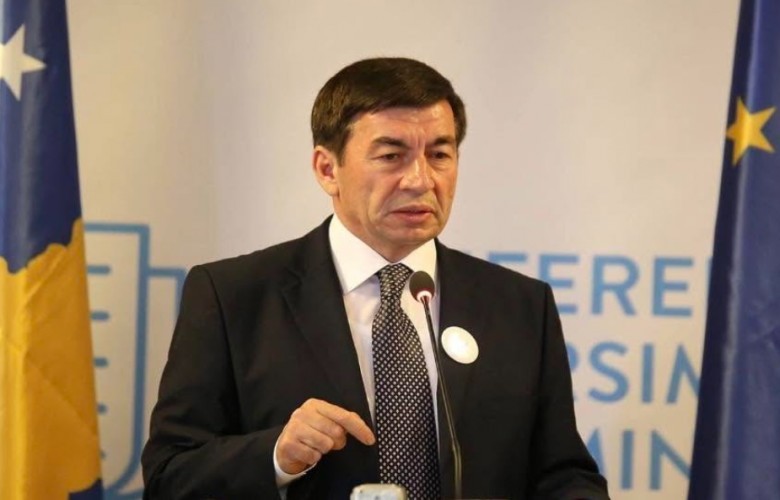
Academic Arsim Bajrami has proposed the urgent establishment of a state commission of legal experts to analyze the first-instance verdict against former Kosovo Liberation Army (KLA) leaders at the Specialist Chambers in The Hague and provide additional expertise to their defense teams during the appeals process.
In a proposal published on Facebook, Bajrami calls for the mobilization of Kosovo's legal expertise and coordinated institutional engagement, arguing that the next phase of the proceedings should focus on legal arguments, evidence analysis and identifying potential material and procedural violations.
He proposes that the commission include current and former judges, prosecutors, criminal lawyers, professors of criminal law and experts in international criminal law. The body, he says, should operate professionally and independently, without political influence.
According to Bajrami, its mandate would include conducting a comprehensive legal assessment of the verdict, examining how evidence was presented and evaluated, analyzing individual criminal responsibility and identifying possible inconsistencies between the evidence and the trial panel's findings.
The commission would also prepare a comprehensive legal document to be made available to defense teams as additional expertise when drafting their appeals.
“The upcoming battle is exclusively legal,” Bajrami said, stressing that the defense must rely on concrete evidence, professional arguments and international criminal law standards.
He insists that the commission's work should proceed in parallel with the defense teams' preparations, without delaying their work or jeopardizing procedural deadlines.
Evidence, witnesses and international monitoring
In his proposal, Bajrami identifies several areas that should receive particular attention during the appeals process, including the establishment of the factual circumstances, individual criminal responsibility, witness credibility, the historical context of the Kosovo war, the KLA's organizational and command structure, and allegations concerning the existence of a criminal plan or intent.
He also highlights the importance of identifying additional witnesses and evidence that could be presented during the appeals proceedings.
Bajrami argues that the defense should seek to broaden its evidentiary base by identifying witnesses with direct knowledge of specific events, locations and organizational structures.
His proposal also calls for independent international monitoring of compliance with fair trial standards at the Specialist Chambers. He suggests involving international professional organizations and assessing the proceedings against the standards of the European Convention on Human Rights, particularly the presumption of innocence, equality of arms and the right to an effective defense.
He further calls on Kosovo's highest institutions, including the President, Prime Minister and Ministry of Foreign Affairs, to coordinate diplomatic efforts with countries that fund the Specialist Chambers and Kosovo's partner states.
The objective, according to Bajrami, would be to secure support for independent monitoring and international legal expertise.
Croatian generals' case cited as an example
Bajrami also refers to Croatia's experience in the case of generals Ante Gotovina and Mladen Markač, who were initially convicted by the International Criminal Tribunal for the former Yugoslavia (ICTY) but acquitted by its Appeals Chamber on November 16, 2012.
He proposes studying the case, particularly the standards applied in evaluating evidence, determining individual criminal responsibility and reviewing first-instance findings.
In conclusion, Bajrami outlines eight proposed measures, including establishing a state commission, preparing legal expertise, identifying additional evidence and witnesses, engaging international experts, securing independent monitoring and coordinating Kosovo's diplomatic efforts.
“The KLA war must be defended through historical truth, while the innocence of the accused must be argued through evidence and criminal law standards,” his proposal states.
Bajrami concludes by urging Kosovo's institutions to act without delay, emphasizing that local legal expertise and institutional coordination should be mobilized immediately, while defense teams must retain their professional autonomy and respect the deadlines of the appeals process.